 |
|
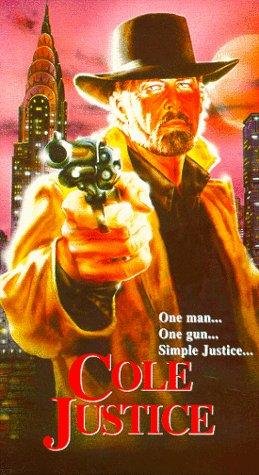
(1989) Director: Carl Bartholomew Several times I have been asked the question, "If you had the chance to make a movie, what kind of movie would you make?" Well, that's a tough question for me, mainly because there are so many stories I would like to bring to the silver screen, or even direct-to-video if that was my only choice. One story I would love to be able to film would be the chaotic going-ons at RKO pictures during the reshoot of His Kind Of Woman, hilariously detailed by director Richard Fleischer in his memoir Just Tell Me When To Cry. Another true story I would also love to do would be about the rise and fall of producers Menahem Golan and Yoram Globus during the '80s, even if I had to change names and details so it would become a satire and shielding me from a possible lawsuit. (At one point I would focus on The Gamma Group's American Boxer film series: "The deadliest art is now in the hands of an American - literally".) Oh, all the films there are that I would love to make! I'd love to make a high-octane martial arts movie, with the martial arts done in the best Hong Kong style, and with plenty of broken bones and severed arteries. I'd also love to make a hard-core zombie movie, with plenty of intense and frantic action, and also with plenty of broken bones and severed arteries. And if you have been reading this web site long enough, you have probably guessed that I also would love to make a western. I'd fill it with the essential ingredients that make a great western: Breathtaking landscapes, serious (and frequent) gunplay, and a hero of the charisma and skill of gunfighters like Sartana. I must confess that I would be sorely tempted to cast myself as the hero in my western, to have the chance to play a cool and unshakable gunslinger. Who wouldn't seriously think of it, given the opportunity? Though I think in my case, common sense would win out in the end. I may have the sculptured looks that make men tremble and get women all hot, but I don't think I have the acting talent necessary to not only suggest great strength, but constantly. Besides, also having the chore of writing and directing - or even just one of those tasks - would already be sapping my personal resources. It's hard to do it all, but there have been several people through the decades who have done so. Sylvester Stallone has done it a few times, so has Jackie Chan. And then there is David Heavener, who has managed to continuously take on several roles in many of the B-movies he has made (like Outlaw Force), despite the stunningly awful quality of them. Not just badly made, but self-indulgent. In fact, many such multiple-role projects could be considered self-indulgent for the filmmakers having a hand in the prime parts of the movies, and the question rises if these particular kind of movies should all be labelled vanity projects. Well, some certainly can. But on the other hand, it could be argued that the filmmakers might have a perfect right to be self-indulgent. After all, these filmmakers are not only putting in all this extra work, they weren't exactly forcing the other people associated with the movie (from producers and crew) to work with them. It's their movie, and you don't have to see it if you don't want to. Which brings us to the movie being reviewed here, Cole
Justice. Not only did Carl Bartholomew star in it, he also
wrote the story (though not the actual finished screenplay), sat in the
director's chair, and also acted as the executive producer. That's
certainly enough to place the movie in the precarious state of becoming
a vanity production. But does it end up being one? Well, I think the
answer is both yes and no. For one thing, the movie seems to have one
common characteristic of vanity projects, which is that the filmmaker
inje Before getting into detail about all those nitpicks, the plot. In 1953, the teenage Coleman Justice, already a lover of the western genre, takes his girlfriend to see Shane. Running back to the theater to get her lost locket (even notice how many lockets got lost in popular culture in the '50s?), he comes back to find her being beaten and raped by some local thugs. Hit by behind, he is made helpless and she dies in front of his eyes. Cole silently broods the death, but it plants the seeds for what is to happen more than 30 years later. In the present day, Cole is even more of a western fan - in fact, he is now a western film professor at the local college. One night while relaxing at a local bar, a waitress starts being sexually assaulted by some drunken louts. It strikes that painful nerve long buried in Cole's past, and he quickly acts. He pulls a Superman act by going out to his jeep, and coming in dressed as a cowboy - hat, coat, spurs, and his gun and knife. He makes good work of three of the louts. The others escape, but Cole has a lead on them. Soon the city is enthralled by the exploits of this modern-day vigilante (imaginatively labeled "The Cowboy Killer" by the press), and Cole seems determined to clean the county completely up. As an actor, Bartholomew at the very least can take comfort in knowing he definitely stands head and shoulders above David Heavener. Physically, he has the fortune to have features that let him visually come across believably both as a college professor and a modern-day cowboy; all that he needs to transform from one to another is a change of clothing. When it comes to speaking dialogue, he's at his best when the scene is a one-on-one conversation in relaxed and informal circumstances. In such instances he develops a rapport that while maybe a little rough on his end, gives us the impression that Cole respects and cares about the person he's speaking to, the best of these scenes being those with his distressed campus security guard friend Benjamin (Zikefoose). On the other hand, the way he lectures his students during class doesn't hit the right note. His timing seems a little off, and he sounds a little reluctant and unsure of himself, hardly the behavior of a seasoned college professor. Also, when he's in his western garb and trying to act tough, there's no real conviction in his tone of voice. On the other hand, it could always be argued that this is in fact more realistic - most college professors who would suddenly turn hard-core vigilante after decades of peace probably wouldn't sound cool and confident, at least at first. In the director's chair, Bartholomew stumbles more often than not, though a lot of the problems with the direction would also come from pretty much anyone else in these circumstances. This is an extremely low-budget movie, and the limited resources are evident in almost every shot. The photography is often slightly out of focus, the colors are dull, and several scenes taking place indoors are inadequately lit. Even the clips from Shane and Once Upon A Time In The West that Bartholomew somehow got permission from Paramount to use are not that good-looking, though maybe they were degraded in the editing room to match the rest of the movie. Speaking of editing, the movie seems to have been transferred to videotape before the editing stage, and the attributes of such editing (like with fade-outs) adds an extra topping of cheese to the feel of it all. Putting aside the technical problems of the movie, Bartholomew does show some ability at directing. The scenes of one-on-one conversation are competently done, and in the 1953 portion of the movie he builds some nice atmosphere - a bustling street in the night, and a funeral sequence directed just like one you'd find in a classic western, wind-blowing and all. (Though I'm not sure a full high-school band playing at the end of the scene was a good idea.) However, there are a number of moments in the movie that are very ineptly done, the action scenes in particular. For example, when Cole enters that bar in his western garb and goes into action, we never see his face for the entire time until he is finished shooting and stabbing all the perverts that don't manage to escape. While the direction may be problematic, the screenplay also is very misguided at times. Take the not-so-subtle injected politics that I previously mentioned. It should come as no surprise that some characters in the movie consider the vigilante a hero - this kind of thing is expected in movies like this, and I think most of us have a part deep inside ourselves that likes the idea of people fighting back for what's right even if the law disagrees. Though even with these circumstances, I think many people would agree the movie goes way overboard with how the citizens embrace the vigilante. No one ever voices concern, and their praise gets laid on extremely thickly with statements like, "He wasn't doing anything we would do if we had the guts!" And all of this is despite that this city doesn't seem to be any more crime-ridden than any other college city. Feminists may also be outraged by the various portrayals of women in the movie. The female dean of the college, which Cole refers to as a "new wave feminist b*tch" at one point, is a cold-hearted monster who wants to dismiss Benjamin from his job for no apparent reason other than she's just mean. The female co-owner of the bar apparently doesn't mind customers assaulting her staff, nice young women who get more than a passing glance end up being raped and/or killed, and Cole's sweetie is a woman who doesn't seem to mind that Cole has kept disappearing for months on end during their decades-long relationship... and is still patiently holding out for him to finally settle down with her once and for all. This relationship subplot leads to a ludicrous revelation near the end, one that could never have stayed so secret and for so long even when you consider the sporadic and prolonged circumstances of this relationship. Equally unbelievable is how (except for one young man) the students of Cole seem mighty slow to catch on that their instructor is the vigilante, despite things like the newspaper sketch of the vigilante looks just like Cole... or that Cole clearly shows them on several occasions that he lives by the cowboy creed outside of class... or when they read in the newspaper about The Killer Cowboy lynching someone, one day after Cole had sketched for them on the chalkboard a man getting hanged. There's also a subplot about how Cole has long been suspected of eventually murdering the men who killed his girlfriend, a suspicion that is mentioned once and never comes to influence the story at all, then abruptly and completely wrapped up with a surprise revelation that's no surprise at all. Then there is the unlikely coincidence that ties one of the punks with one of Cole's students. Oh, I almost forgot: Cole just happened to have a long coat, a cowboy hat, spurs, boots, a knife, and a pistol in his jeep that night he went out for a quiet drink? And yet... despite all those laughable moments and its badly-made nature, there is still something that makes Cole Justice somewhat likable to a degree. It's hard to pinpoint just what it is about this movie that made a part of me really enjoy it. Of course, there is that whole western-theme, and I've mentioned time and again how I enjoy the genre. The movie itself seems very enthusiastic about the genre, constantly quoting from classic westerns, and with its protagonist living by the western code every possible chance. He's a non-conformist, and is frankly proud of it. In fact, just about everyone around him accepts him for the way he's choosing to live his life. You can't help but admire and even be a little jealous that this character has a very enjoyable and fulfilling lifestyle. Not only that, you see that Carl Bartholomew himself is obviously getting to fulfill one of his dreams, to play a cowboy. His enjoyment gets past any weak acting or any of the movie's other problems, and it's quite infectious. During Cole Justice there will be times where you won't help but feel you are vicariously living out your dreams, whether they are to be a cowboy or not. Hopefully, your dreams will have better production values and plotting than this dream-come-true. (Posted October 17, 2015) Check
for availability on Amazon (VHS) See also: The Last Marshal, Outlaw Force, The Third Society |
 cts
his politics at one point or more in the movie. Another thing this
movie matches with some other vanity projects is that its protagonist
is continuously portrayed to be completely right and justified with his
actions, even though these actions may raise questions with even
viewers who love seeing criminal scum get theirs. Yet at the same time,
the movie shows a real passion by Bartholomew, for westerns and even
filmmaking in general. It's not that well done overall - there are far
too many parts not that well executed, some of them badly done enough
to become very silly - yet at the same time there's a feeling of
sincerity to its entirety, a sense that Bartholomew and company were
really trying hard to make a movie that, vanity project or not, would
please the audience. As much as you will nitpick it, you won't help but
still feel some fondness towards it.
cts
his politics at one point or more in the movie. Another thing this
movie matches with some other vanity projects is that its protagonist
is continuously portrayed to be completely right and justified with his
actions, even though these actions may raise questions with even
viewers who love seeing criminal scum get theirs. Yet at the same time,
the movie shows a real passion by Bartholomew, for westerns and even
filmmaking in general. It's not that well done overall - there are far
too many parts not that well executed, some of them badly done enough
to become very silly - yet at the same time there's a feeling of
sincerity to its entirety, a sense that Bartholomew and company were
really trying hard to make a movie that, vanity project or not, would
please the audience. As much as you will nitpick it, you won't help but
still feel some fondness towards it.


